Most guides on this topic are written by people who've never managed a marketing team. They've attended the right conferences. Read the same McKinsey reports. Played with ChatGPT for a week.
This is different.
I rebuilt Afterpay's marketing function after a 60% headcount reduction. Doubled scope. Hit 108% of annual targets. Delivered 21% year-on-year GPV growth. With half the people.
AI wasn't an add-on. It was the architecture.
Here's what actually works.
The Wrong Mental Model
Most companies approach this backwards.
They buy tools. They add "AI" to job descriptions. They hire one person with "AI" in their title + call it done.
That is not an AI marketing team. That is an existing team with expensive subscriptions.
"An AI marketing team is not a team that uses AI tools. It is a team designed around what AI can do, so humans only do work that requires humans."
The distinction sounds subtle. The operational difference is enormous.
Layer AI on top of an existing structure + you get marginal efficiency gains. Design the team around AI from the start + you get structural leverage. The difference is compounding vs. additive.
What AI Handles vs. What Humans Handle
Start with an honest audit of where your team's time actually goes. In most marketing orgs, the split looks roughly like this.
What AI does well
- High-volume, repeatable tasks: briefs, first drafts, copy variants, performance summaries
- Pattern recognition at scale: audience segmentation, lifecycle triggers, budget allocation signals
- Personalisation: 1:1 messaging across thousands of customer journeys simultaneously
- Monitoring + alerting: campaign performance, anomaly detection, spend pacing
What AI does poorly
- Brand voice + creative direction. It can draft. It cannot decide.
- Stakeholder management + navigating internal politics
- Building agency, media + partner relationships
- Making the hard call when data is ambiguous
- Strategy: synthesising market context, competitive dynamics + business goals into a coherent point of view
Your team structure follows directly from this. The goal is not to replace marketers. It is to redesign the team so every marketer is operating in the zone where human judgement matters.
The Three-Layer Team Structure
The AI marketing teams I've built + studied work in three distinct layers.
Layer 1: Strategy + leadership
Your CMO or marketing director layer. Small. Two to three people. They own positioning, brand direction, budget allocation + relationship management. They make judgement calls. AI cannot replace this layer, + anyone who tells you otherwise is selling something.
Layer 2: Execution leads
Your channel owners + functional leads. Performance, brand + content, CRM, product marketing. Three to five people depending on company stage. Their job: set the brief, evaluate the output, make the call. They use AI constantly. But they are directing it, not running it.
Layer 3: AI-native operations
This is where the leverage is. Automated lifecycle journeys. Dynamic creative pipelines. AI-generated content reviewed, not written, by humans. Programmatic running on smart rules, not manual optimisation.
In a well-built AI marketing team, this layer produces what previously required six to eight people. It runs 24/7. It gets better over time. And it frees your execution leads to focus on the work that actually requires them.
What I Did at Afterpay
In 2023, Afterpay went through a significant restructure. I inherited a situation where the marketing team had been cut by 60% while scope stayed the same. ANZ, UK, Canada. Same markets, same targets, half the people.
Most leaders in that position lobby for headcount or quietly reduce scope. I did neither.
We rebuilt around outputs, not activities.
Lifecycle automation at scale
Rather than CRM managers manually building campaigns, we moved to a trigger-based architecture. Customer signals drove communication. We got to 120+ automated journeys. The team's job became designing the logic + reviewing performance, not building + sending.
In-house creative studio
Rather than relying on agency lead times, we built a small internal creative capability augmented by AI production tools. Brief to live in hours, not weeks. Not because the work was lower quality. Because the production layer was faster.
Composable CDP infrastructure
We built on Hightouch, sitting on top of our data warehouse. Audiences were dynamic. Personalisation was real-time. Without clean audience infrastructure, AI marketing is noise on top of noise. Get this right first.
"The team's job shifted from building campaigns to designing the logic + reviewing performance. That is a fundamentally different, higher-value role."
The Tools That Actually Move the Needle
I'm not going to list 50 AI marketing tools. Here is what made a structural difference.
A real CDP
Not a campaign tool with a CDP feature bolted on. A proper composable CDP sitting on your data warehouse. Without clean, real-time audience infrastructure, AI marketing is window dressing. This is the foundation. Get it right before anything else.
A lifecycle platform with proper branching logic
Braze, Iterable, or similar. The platform matters less than the logic. You need someone who can design customer journeys properly. The AI is in the triggers + the personalisation. The platform is just the delivery layer.
An AI writing layer
For first drafts, copy variants, performance summaries + briefs. The specific tool matters less than the workflow. The goal is removing the blank page problem + the first-draft bottleneck. Not replacing your copywriter. Freeing them to do better work.
AI for creative production
Not to replace your creative director. To remove the bottleneck between brief + asset. Tools evolve fast here. What matters is the workflow + the brief quality. The AI output follows from that.
What not to buy
Anything that promises to do your strategy for you. AI strategy tools are mostly expensive dashboards with a chatbot bolted on. Strategy requires synthesis, judgement + a point of view. That is a human job, full stop.
How to Start the Transition
If you are running a traditional marketing team + want to move toward an AI-native model, here is a practical starting point.
Step 1: Audit what your team actually does
Not what their job descriptions say. What they actually do, hour by hour, week by week. Most marketing teams run 30 to 40% of their time on work that is either administrative or repeatable at scale. That is your AI opportunity. Find it before you start buying anything.
Step 2: Identify three to five high-leverage unlock points
Where is AI most likely to save time + improve output simultaneously? Usually: content production, audience management, campaign reporting + first-draft copywriting. Pick the two or three with the biggest impact + start there. Don't try to transform everything at once.
Step 3: Restructure around outputs, not activities
This is the hard part. It means changing job descriptions, KPIs + how you talk about the team's work. An AI-native team is not measured on how many campaigns they built. It is measured on the outcomes those campaigns drove. That shift requires real leadership commitment. It will not happen on its own.
Step 4: Hire for judgement, not execution
When you do need new people, hire for critical thinking + commercial acumen. Not for proficiency with a specific tool. Tools change. Good judgement compounds.
The Hard Truth
AI marketing transformation is not primarily a technology problem. It is a leadership problem.
The technology exists. The tools are good enough. The bottleneck is almost always one of three things: a leader who doesn't understand what's possible, a team resistant to change, or an organisation measuring the wrong things.
If you are the CMO or head of marketing, this is on you. You have to design the team. You have to set the standard for what AI-native work looks like. You have to be willing to restructure around outputs, not activities.
Nobody will hand you a roadmap. But the compounding effects, once the foundation is right, are significant.
Want help doing this?
I work with a small number of companies as a fractional CMO. If you are looking for someone who has actually built + run an AI marketing team, let's talk.
Book a free 30-minute call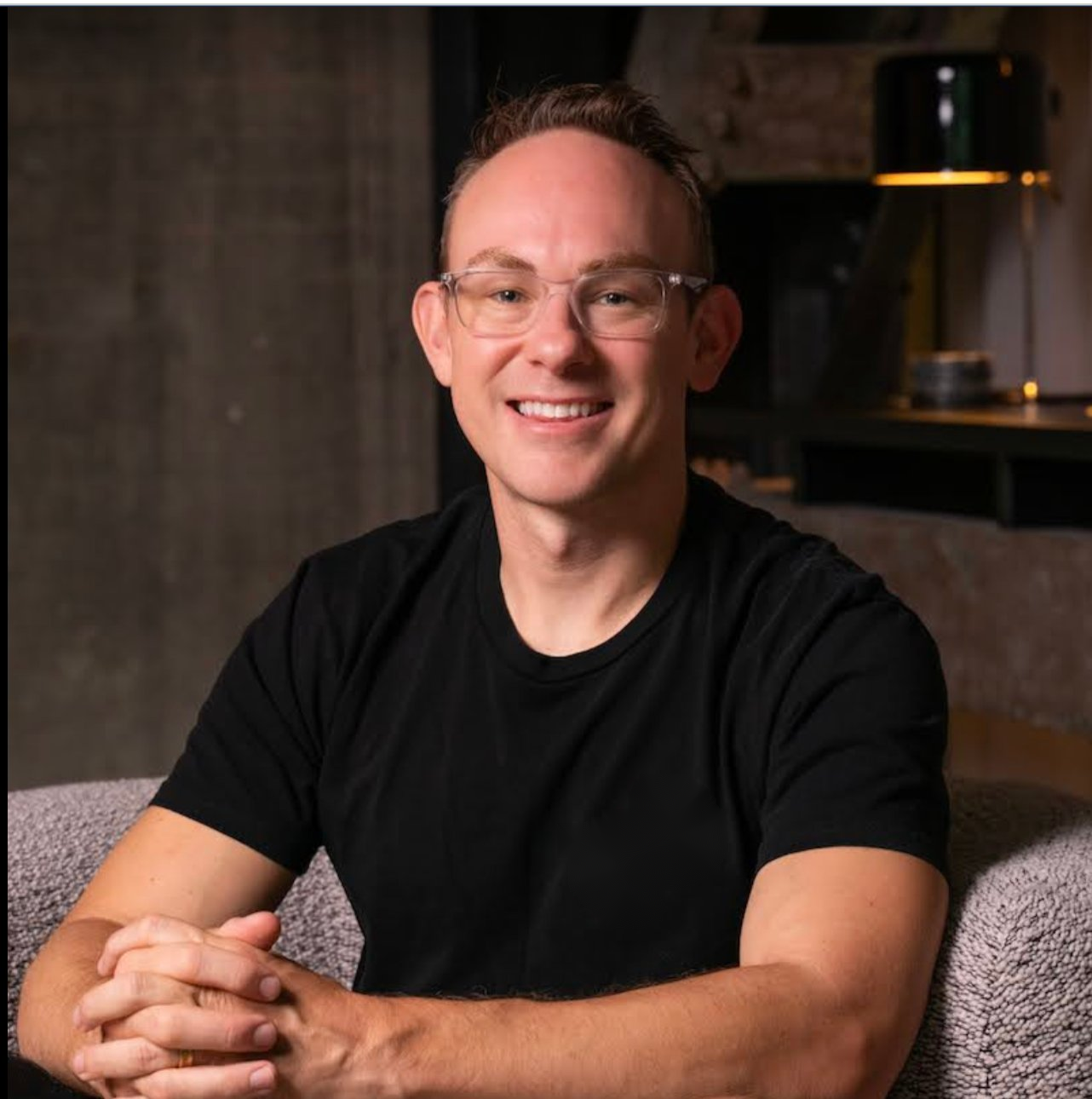
Joel Moran
Senior marketing leader + consultant. Former VP Marketing International at Afterpay (Block / S+P 500). Founding Head of Marketing at Kayo Sports. Available as a fractional CMO + open to senior in-house roles. joelmoran.com